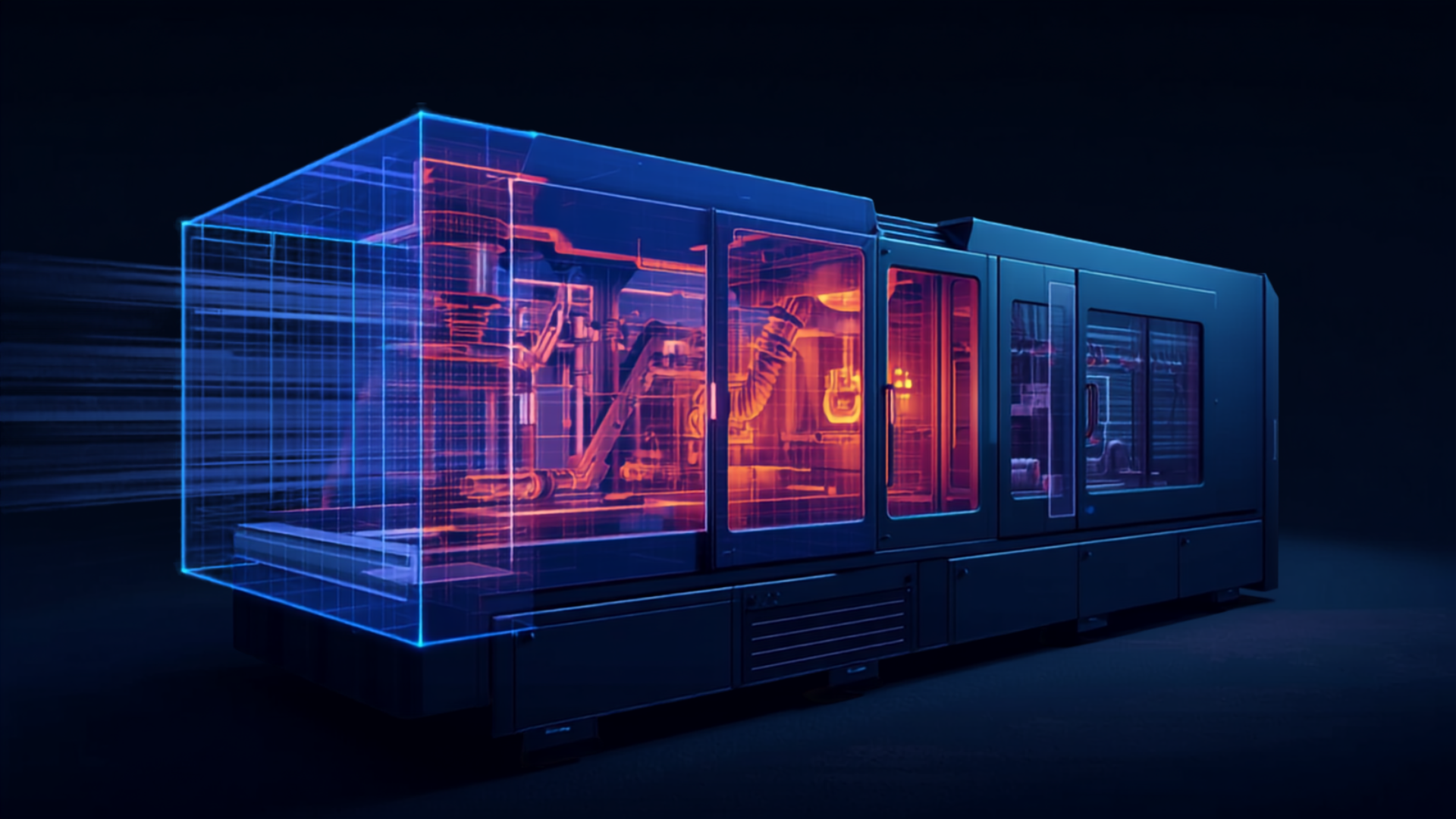
Turning Cold Forming Machine to Warm Forming: Using a Thermal Digital Twin to De-Risk a Forming Machine Upgrade
The challenge
Cold forming machines are workhorses of precision manufacturing, reliable, well understood, and tuned over years of production. But some parts and materials perform better when formed at an elevated temperature rather than at room temperature. The catch is that converting a cold-forming machine into a warm-forming one isn't as simple as adding a heater.
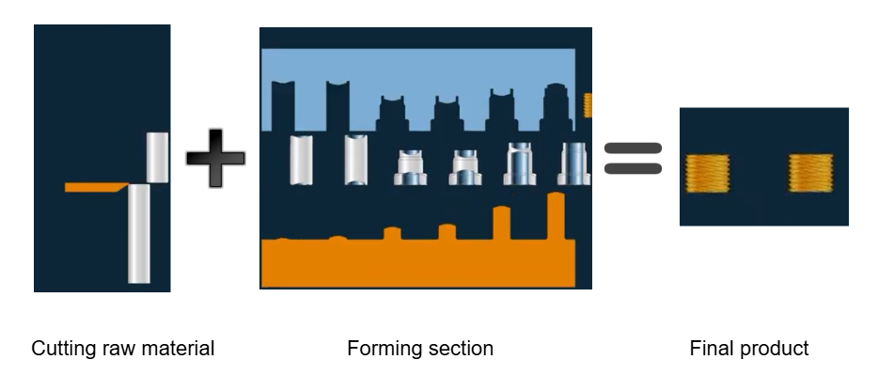
Fig 1: Cold forming process (3 important steps)
Heat changes everything. Components expand, tolerances shift, materials behave differently under load, and parts of the machine that were never designed to run warm suddenly have to. Committing to a full physical redesign before understanding those effects is expensive, slow, and risky. A heating element in warm forming is usually added between cutting and forming section as shown in above fig 1.If something is going to bind, crack, or wear out prematurely, it's far better to find out on a computer screen than on the shop floor.
That was the starting point for this project: build a prototype pathway for converting an existing cold-forming machine to warm forming, without going in blind.
Why start with a model, not a wrench
There was no existing thermal reference data for this machine. Nobody had systematically mapped how heat moves through it during normal operation. So rather than jumping straight to warm-forming trials, the project took a model-first approach:
- Pick a representative part to use as a consistent reference throughout testing.
- Understand the machine's thermal behavior under its current, cold-forming operation — where heat is generated, where it goes, and how it moves through the structure.
- Build a thermal simulation of that cold-forming process.
- Test the real machine and use the results to calibrate the simulation, so the model's predictions could be trusted.
- Run a structured test campaign with proper planning, instrumentation, and safety procedures to gather the data needed for that calibration. The test was for approximately an hour. Running for the entire day would cost alot. Extrapolation method was used for getting the equilibrium data points.
- Once the model reliably matched reality under cold forming, use it to predict what changes under warm forming like thermal expansion, mechanical stress, and where components might interfere with each other.
The logic is simple: if a model can accurately reproduce known, measurable behavior, it earns the right to be trusted for predicting behavior that hasn't been tested yet. The next two sections walk through how that trust was actually built.
How the model earned trust: a validation loop
Rather than running a simulation once and calling it done, the project treated model-building as a loop that tightens with every pass, comparing physical test results and simulation results side by side until they agreed:
- Two parallel data streams: Every cycle produced raw data from two sources: an instrumented physical test on the machine, and a simulation run of the same scenario.
- Post-processing: Both raw data sets went through a consistent processing pipeline – importing the data, filtering out noise, converting it into a usable common format, and generating the plots and figures needed to compare them meaningfully.
- Comparison: Test data and simulation data were then compared directly, point by point, to see how closely the model reproduced reality.
- Model optimization and decision point: If the two datasets didn't line up closely enough, the model's parameters (things like heat-transfer assumptions and material properties) were adjusted, and the cycle repeated new simulation, new comparison. If they did line up, the model was considered validated.
- A validated cold-forming model: Once the loop consistently produced agreement between test and simulation, the model could be trusted to reveal parameters that are difficult or impossible to measure directly on the physical machine filling in the gaps that instrumentation alone can't reach.
This loop is what turned "a simulation" into "a model we can act on." It also meant that any future change to the machine or process could be re-checked against real data rather than taken on faith.
Extending the model from cold to warm forming
With a validated cold-forming model in hand, the next phase extended it to represent warm-forming conditions rather than starting a new model from scratch:
- Adding the missing physics: The validated cold-forming model was updated to include the components and effects that only come into play once material is introduced at an elevated temperature (in the several-hundred-degree Celsius range) — most notably the feed mechanism that carries the heated material into the forming process, and the heat exchange between that heated material and the surrounding structure.
- Generating the thermal profile: The updated model was run to produce a thermal profile i.e how temperature builds up and distributes across the various parts(especially the forming region) of the machine during warm forming.
- Extrapolating to equilibrium: Because a single simulation run doesn't always reach a true steady state in a practical amount of time, curve-fitting techniques were used to extrapolate the trends and predict what temperature each part would eventually settle at if the process ran indefinitely.
- Translating heat into mechanical effects: Once we knew the steady-state temperatures, we used them to answer two questions: how much each part would expand from the heat, and how much stress that expansion would cause if a nearby part blocked it from expanding freely.
- Identifying probable issues and solutions. Combining the expansion and stress results made it possible to flag, ahead of any physical trial, which areas of the machine were most likely to run into trouble and to start shaping design solutions for them.
Put together, this is the full arc of the project: validate a model against reality under conditions you can safely test, then lean on that validated model, extended piece by piece to see around the corner into conditions you haven't tested yet.
Why this approach matters
The real value of this project isn't any single number it produced, it's the shift in how the conversion is being approached. Instead of a costly, iterative hardware trial-and-error cycle at high temperature, the team built confidence in a model that can be interrogated, adjusted, and re-run far more cheaply than a physical prototype.
That means:
- Lower risk — potential failure points are identified before hardware is committed.
- Lower cost — fewer physical test iterations are needed at the target operating condition.
- Faster iteration — design changes can be evaluated virtually before being built.
What's next
The next phase focuses on translating the model's predictions into concrete design changes — cooling strategies for the components most affected by heat, tighter control of thermal expansion at critical interfaces, and updated safety systems appropriate for higher-temperature operation. The model itself will continue to be refined as more data comes in, and a simplified version is being developed so design ideas can be evaluated even faster.
In short: before this machine ever runs a warm-forming part for real, its digital twin will have run it many times over and that's exactly the point.